 Blog
Blog
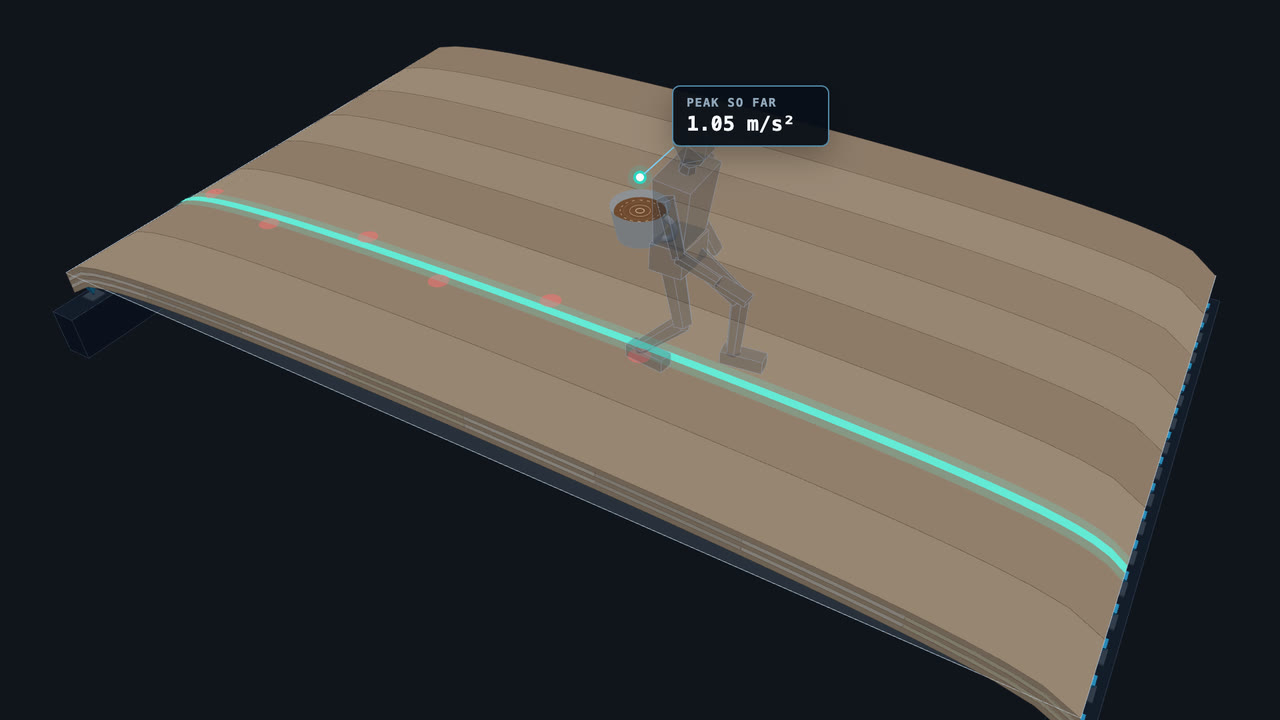
Vibration, not strength, often sets how far a CLT floor can span.
"The design of mass timber floors tends to be controlled by vibration rather than strength."
WoodWorks, U.S. Mass Timber Floor Vibration Design Guide (2023)
Why? Timber is strong for its weight, but it's light. Footsteps move it more, and bare CLT has little damping, so every step keeps ringing.
What decides it
- Frequency. Above about 9 Hz, each step is a knock that dies out. Below about 8 Hz, steps fall into rhythm and build up.
- Span. The biggest lever: a longer span means a lower frequency.
- Stiffness. A thicker panel raises the frequency.
- Mass. It lowers the frequency, but a heavier floor moves less with each step.
- Damping. It sets how long the floor keeps ringing.
Same 5-ply CLT panel, same walker
- 5 m span: 14 Hz, still moving 2 s after the walker leaves.
- 7 m span: 7.3 Hz, still moving 10 s, and felt 8× more.
Musaab Mahjoub built a demo so you can see it. Draw a path, put your coffee down, change the span, and watch the floor ripple. The motion is drawn about 600× larger and 4× slower.
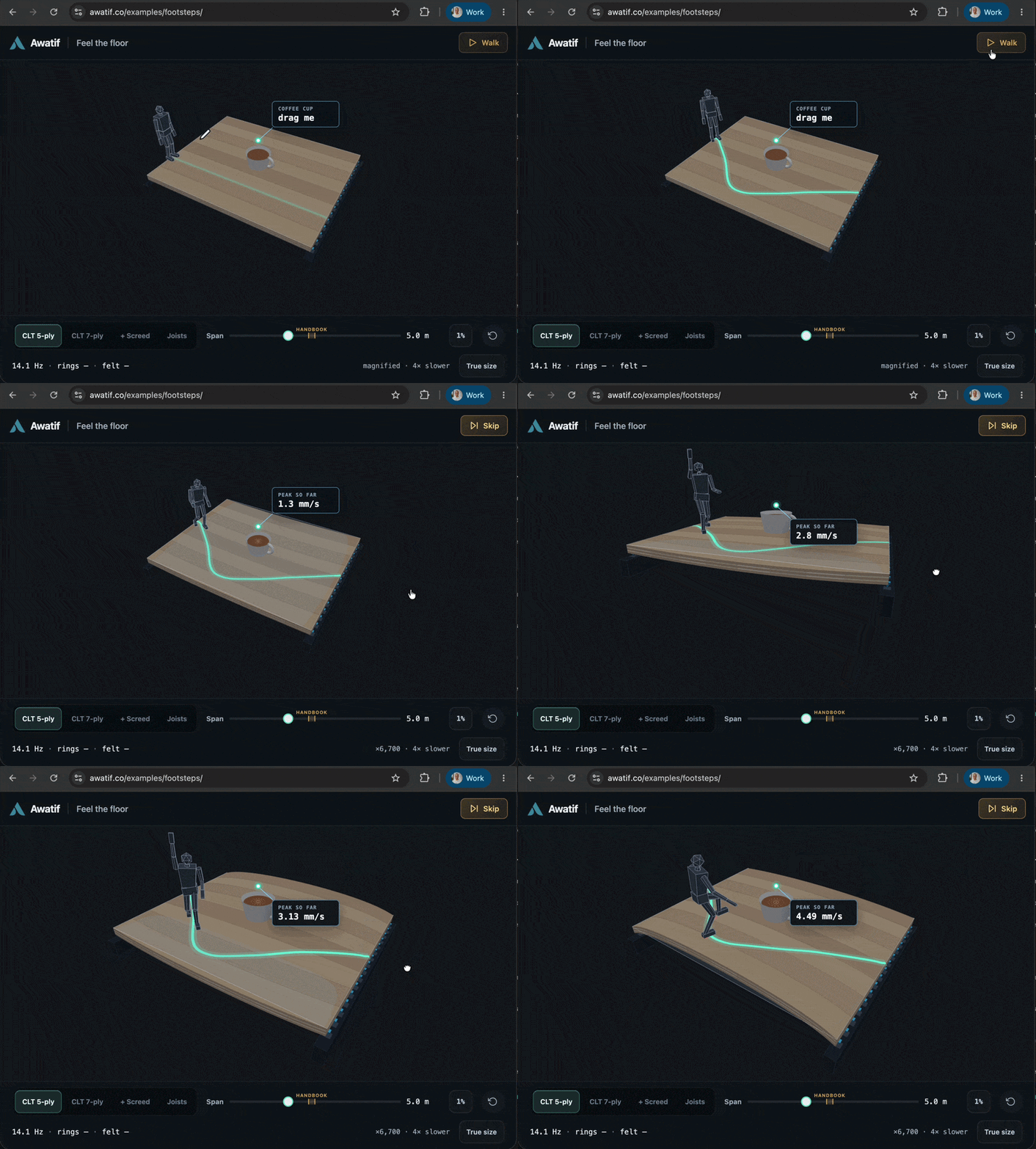
Play with it here:
awatif.co/examples/footsteps
Bare CLT at 1% damping, one 700 N walker. Illustrative, not a
design check.
At Awatif, I build structural analysis tools and automate engineering workflows for design firms. Happy to answer any questions on LinkedIn or by email.