Awatif Blog: AI agents and software for structural engineers
-
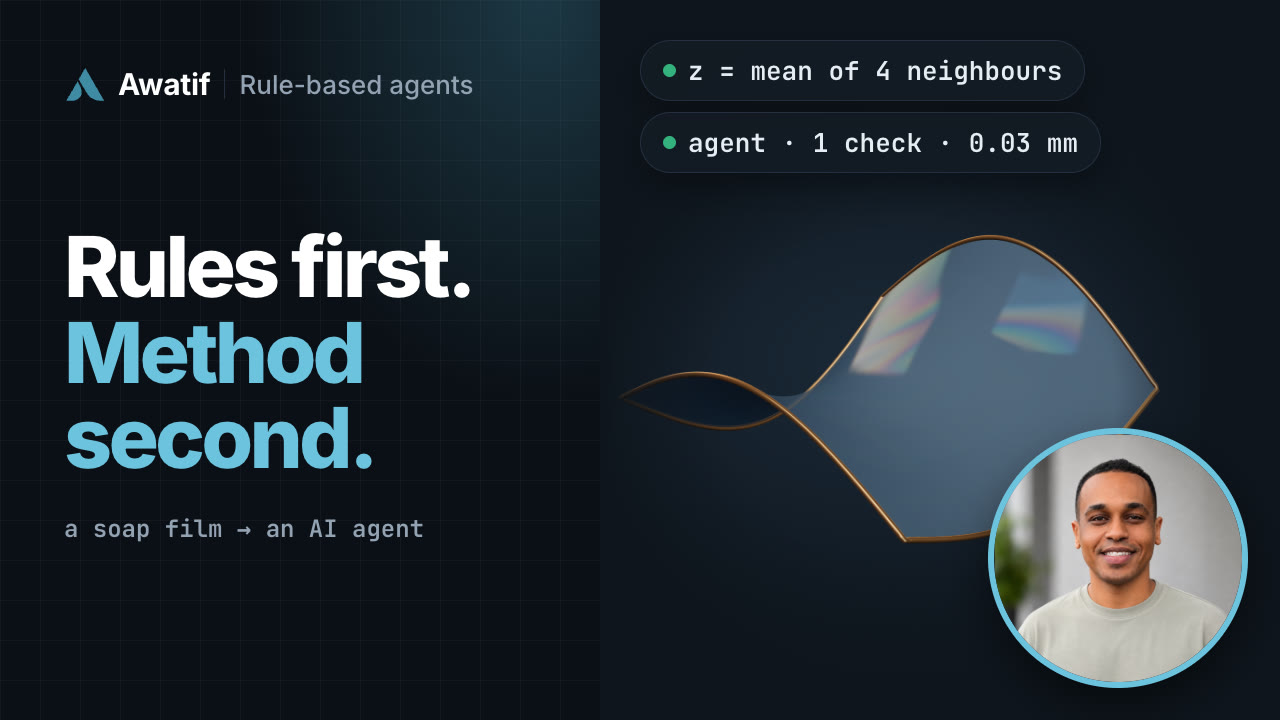
How a Soap Film Can Help Us Build Better Agents
A soap film follows one rule. I gave an AI agent that rule and no method, and compared what it did with Jacobi and Gauss–Seidel.
-
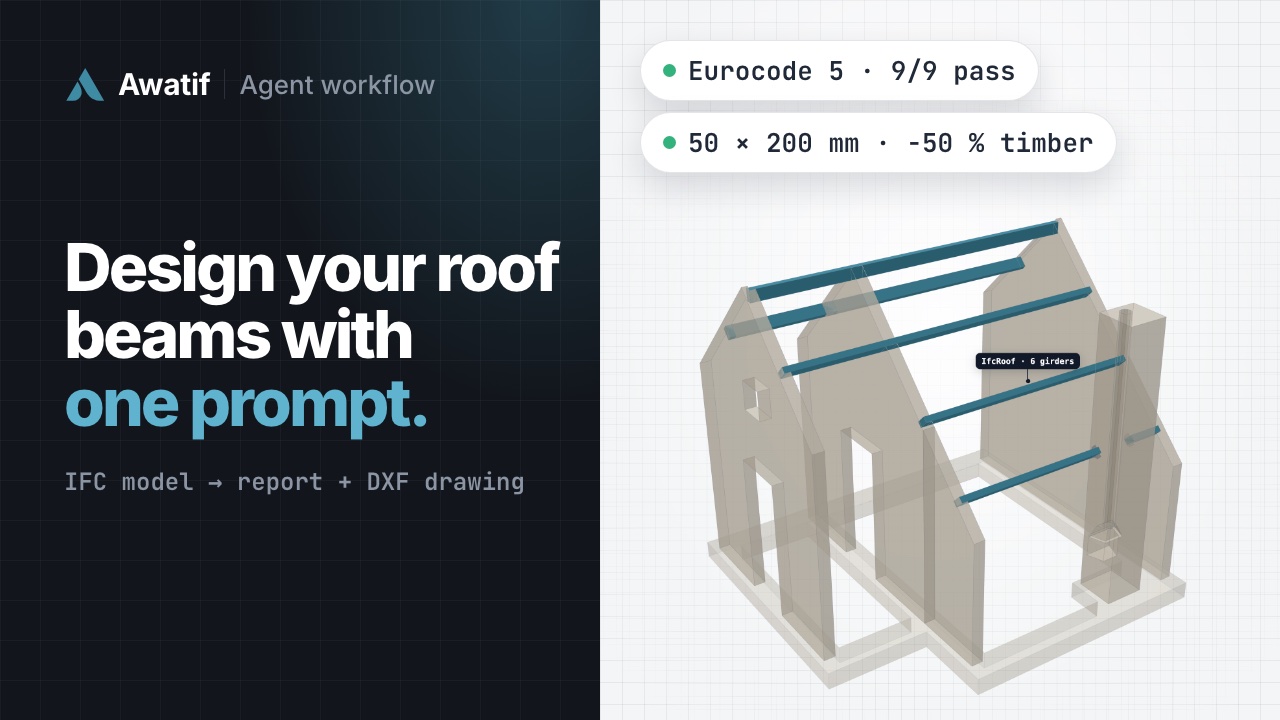
Design Your Roof Beams with One Prompt
You define the structural system and the design requirements. From one prompt, an AI agent builds the model, runs the analysis, designs the beams, and waits for your approval.
-
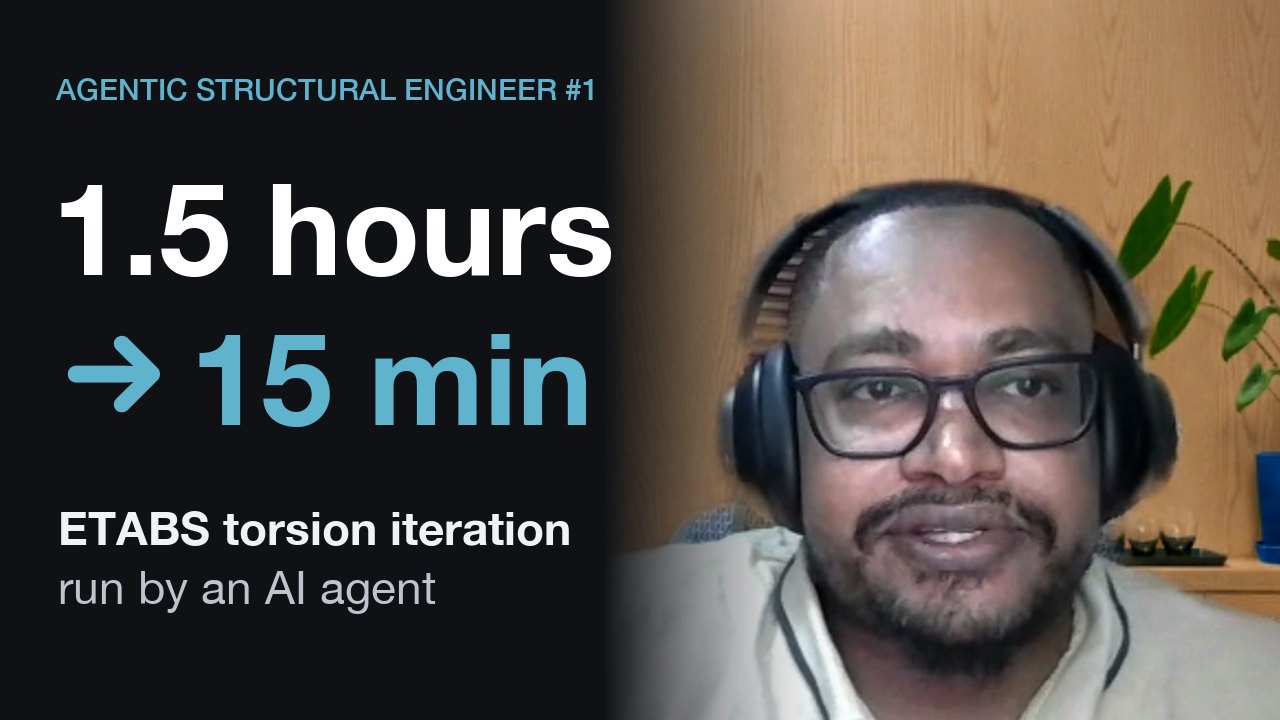
ETABS Torsion Iteration in 15 Minutes Instead of 1.5 Hours
Muhanned Othman built an AI agent that runs the ACI 318-19 torsion modifier loop in ETABS for him. On his model: 1.5 hours down to under 15 minutes.
-

The Problem Was Right. The Business Model Was Wrong.
Six months into building Awatif, we changed the offer, reversed how we divided our time, and clarified what comes next.
-

Three Months Building Awatif Full-Time: Build, Sell, Launch
What happened when we stopped preparing and started putting Awatif in front of structural engineers.
-
Prompt Modeling: The End of Parametric Scripting?
How AI-driven prompt modeling goes straight from intent to geometry — and why the scripting layer in between may not survive.
-

Why I Left My 9-to-5
Leaving a stable structural engineering job, the workflow frustration that led to programming, and the question that became Awatif.
-

Awatif: A New Data Structure for Structural Engineering
Discover how Awatif's three-level data structure enables seamless collaboration from design through analysis.
-

Building a 3D Geometry Modeling Tool for Awatif.co
Learn how we built a hybrid 3D modeling tool combining manual flexibility with parametric efficiency.
-

How Awatif is Redefining Parametric Modeling?
Mohamed Adil joins Mayur Mistry's podcast to discuss the journey behind Awatif and the product vision.
-

Can We Simulate Physics and Design Buildings in Real Time?
Highlights from Mohamed Adil's London conference talk on real-time physics, collaboration, and Awatif's roadmap.
-

A Bird's-Eye View of FEM Simulation
A simple, energy-based intuition for FEM: strain, energy minimization, shape functions, and practical discretization.
-
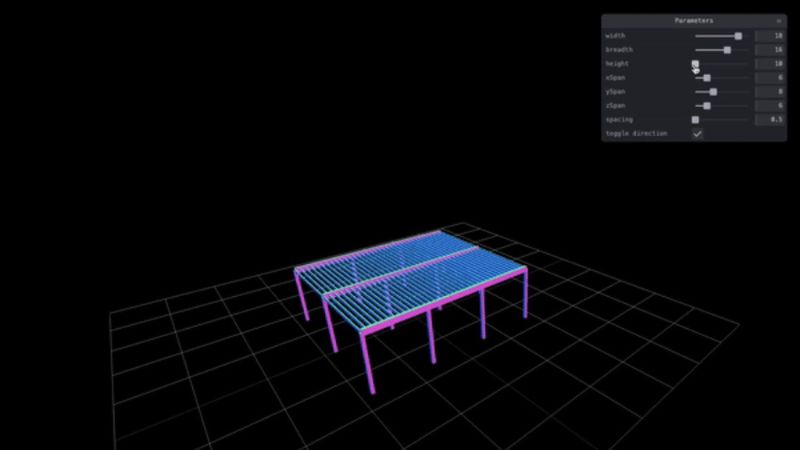
The Benefits of Parametric Modeling in Structural Engineering
How parametric modeling supports automation, design exploration, optimization, and sensitivity analysis.